
Platform / EV Charging Roaming
EV Charging Roaming Platform
Connect your charging network to partner eMSPs and hubs over OCPI 2.1.1 — real-time availability, unified billing, and Plug & Charge, without vendor lock-in.
About Ev bahan controls
What is EV charging roaming?
EV charging roaming lets a driver charge at a station outside their home network using the same app, RFID card, or account — the networks authenticate and settle billing automatically behind the scenes, without the driver needing a separate login for every operator.
Global Reach
Cross-border charging compatibility
One Bill
Unified invoicing for the end user
Instant Access
No need for multiple apps
Secure
OCPI Standard Compliance
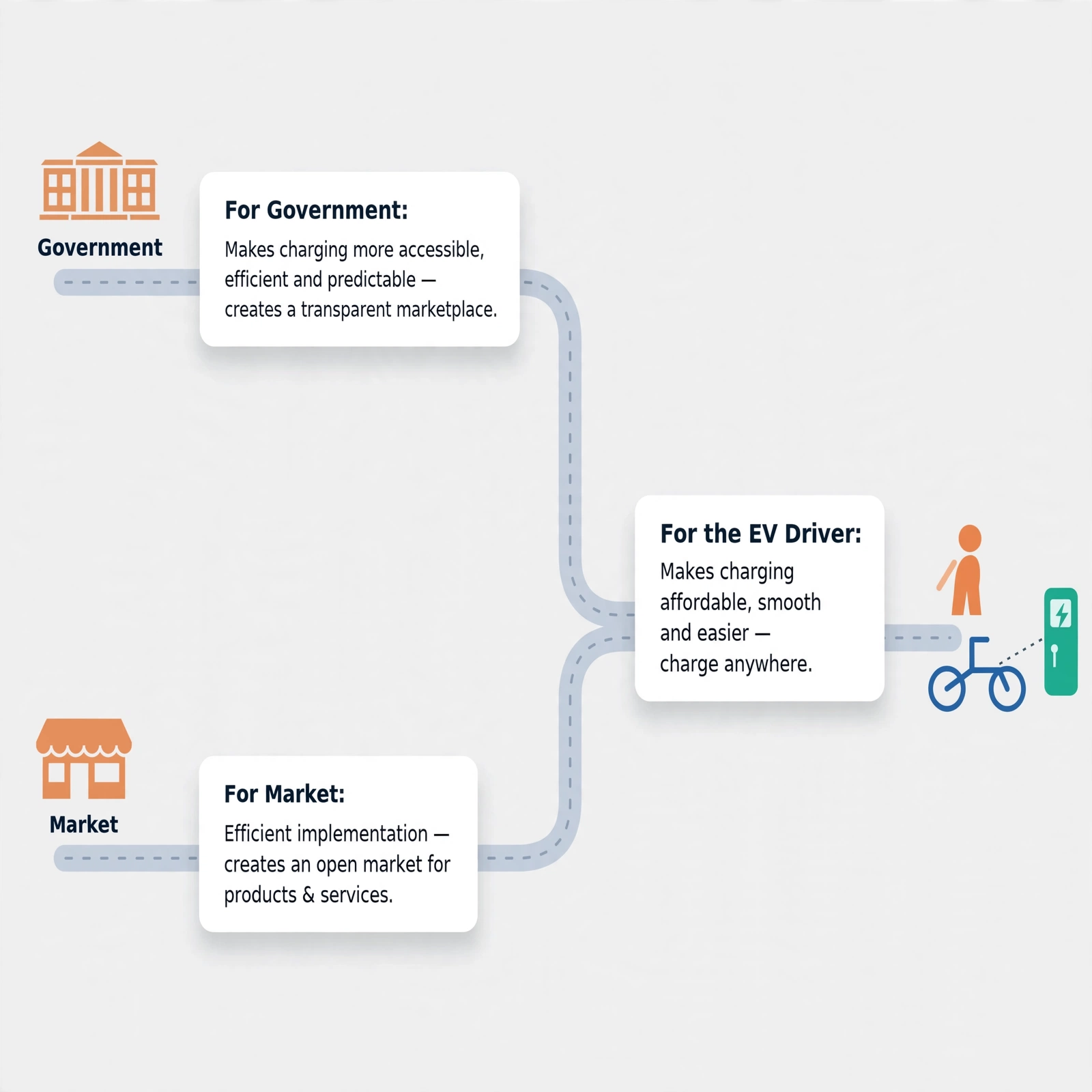
Who We Are
Why roaming matters in India
India’s public charging network has grown fast — but in silos. Over 40 independent charge point operators each run their own app, login, and billing system. A driver charging in one city often can’t use the same account in another.
The result is “charging anxiety” — not knowing which app works at which station — replacing range anxiety as the bigger day-to-day concern for EV owners. Roaming is the fix: one account, any network, real-time availability wherever you are.
Why Choose Us
Build less. Launch faster. Own your brand. Connect more networks. Scale globally.
EV Bahan Controls is not just a charging app. It is the technology layer that helps CPOs, eMSPs, EV OEMs, operators and technology companies build their own branded EV charging and roaming ecosystem
why different customers choose EV Bahan Controls
| Customer | Why EV Bahan Controls? |
|---|---|
| CPO | Manage chargers, drivers, tariffs, sessions, payments and roaming from one platform |
| EV Operator | Launch and operate a complete branded charging network faster |
| EV OEM | Offer a branded charging ecosystem to vehicle owners |
| Technology Company | Add EV charging capabilities without building the entire backend |
| Energy / Utility Company | Combine charging operations with smart charging and load management |
| Fleet Operator | Manage charging, drivers, vehicles, sessions and costs |
| eMSP / Roaming Provider | Build a branded roaming application and connect to charging networks |
| Charger Manufacturer | Add a software/CSMS layer to hardware and offer an end-to-end solution |
| Fuel / Mobility Company | Expand from conventional mobility into EV charging |
| Real Estate / Hospitality | Offer branded charging services to customers and tenants |
Workflow of EV Charging with OCPP

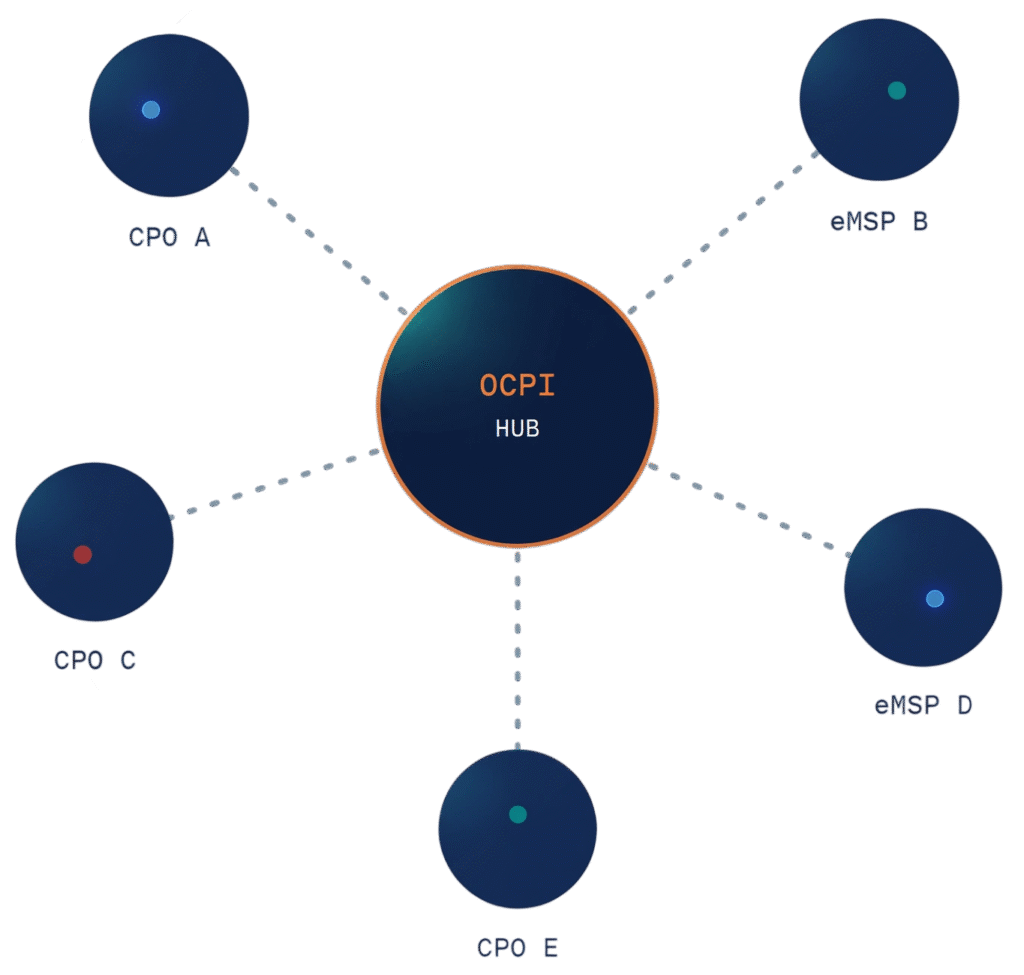
How OCPI Works

Comparison of Major EV Protocols
| Category | OCPI | OCHP | OICP | eMIP | IEC 63119 |
|---|---|---|---|---|---|
| Governing body | EVRoaming Foundation | Open Charge Alliance | Hubject | GIREVE | IEC |
| Type of Governing Body | Independent board | Non-commercial roaming hub | Commercial roaming hub | Commercial roaming hub | International standards organisation |
| Business structure | P2P + hub + mixed | P2P + hub | Hub | Hub | Not available |
| Supported business models | Any network | Any network | Hubject only | GIREVE only | Any network (expected) |
| Launch | 2014 | 2013 | 2013 | 2015 | 2022 (expected) |
| Last release | 2019 | 2016 | 2017 | 2015 | Not applicable |
| Geographic presence | USA, pan-Europe | pan-Europe | pan-Europe, USA, China | France | Global (expected) |
| Openness | High | Medium to high | Medium | Medium to low | High (expected) |
OCPP
Charger ↔ Backend
Open Charge Point Protocol connects the physical charger to its own network's management system — regardless of hardware brand, as long as both support OCPP.

OCPI
Network ↔ Network
Open Charge Point Interface connects one network's backend to another's — handling authentication, real-time data sharing, and billing settlement between operators.
Testimonials
We Are Trusted Over 40+ Countries Worldwide
EV charging roaming lets a driver charge at a station outside their home network using the same app, RFID card, or account — the networks authenticate and settle billing automatically behind the scenes, without the driver needing a separate login for every operator.
Founder
We were worried about the complexity of connecting our hardware to a roaming hub, but EVBahan made it effortless. Their team understands the Indian infrastructure landscape perfectly. We now offer a truly open charging experience, making our brand the preferred choice for EV owners.
Operations Head
Indian EV users are tired of downloading a new app for every city they visit. With EVBahan's roaming solution, we have successfully integrated multiple networks into our single interface. Our users can now travel from Delhi to Mumbai with total confidence, using just one app to pay and charge.
CEO
Scaling a charging app across different states in India is a logistical nightmare. EVBahan’s interoperability platform has allowed us to expand our reach instantly. We provide our customers with a unified map and billing system, which has significantly improved our user retention rates.
Product Manager
Managing a fleet of 100 electric delivery bikes meant dealing with five different charging providers and five different bills every month. EVBahan’s roaming platform has consolidated everything. One unified billing system has saved our accounts team hours of manual work.
Logistics Director
Roaming models
Not all roaming works the same way. Here’s how the main models differ — and where EV bahan Control fits today.
|
Model
|
How it works
|
EV bahan Control
|
|---|---|---|
|
Direct bilateral
|
Two networks connect and settle payment directly with each other.
|
Supported via custom OCPI setup
|
|
Hub-based
|
A neutral clearinghouse routes data and settlement between many networks at once.
|
On roadmap
|
|
Peer-to-peer (OCPI)
|
Open, decentralized protocol — each connection is its own contract, no central party.
|
Core capability — OCPI 2.1.1
|
How the Ecosystem Connects
Our roaming hub handles the complex communication between hardware operators and service providers in real-time.
CPO
Charge Point Operator manages the physical charging stations and energy delivery.
Hardware Layer
EV Bahan Hub
The Intelligence layer: Routing, Authentication, and Settlement.
Integration Layer
eMSP
e-Mobility Service Provider offers the user-facing app and billing management.
Customer Layer
Our Services
What the platform does
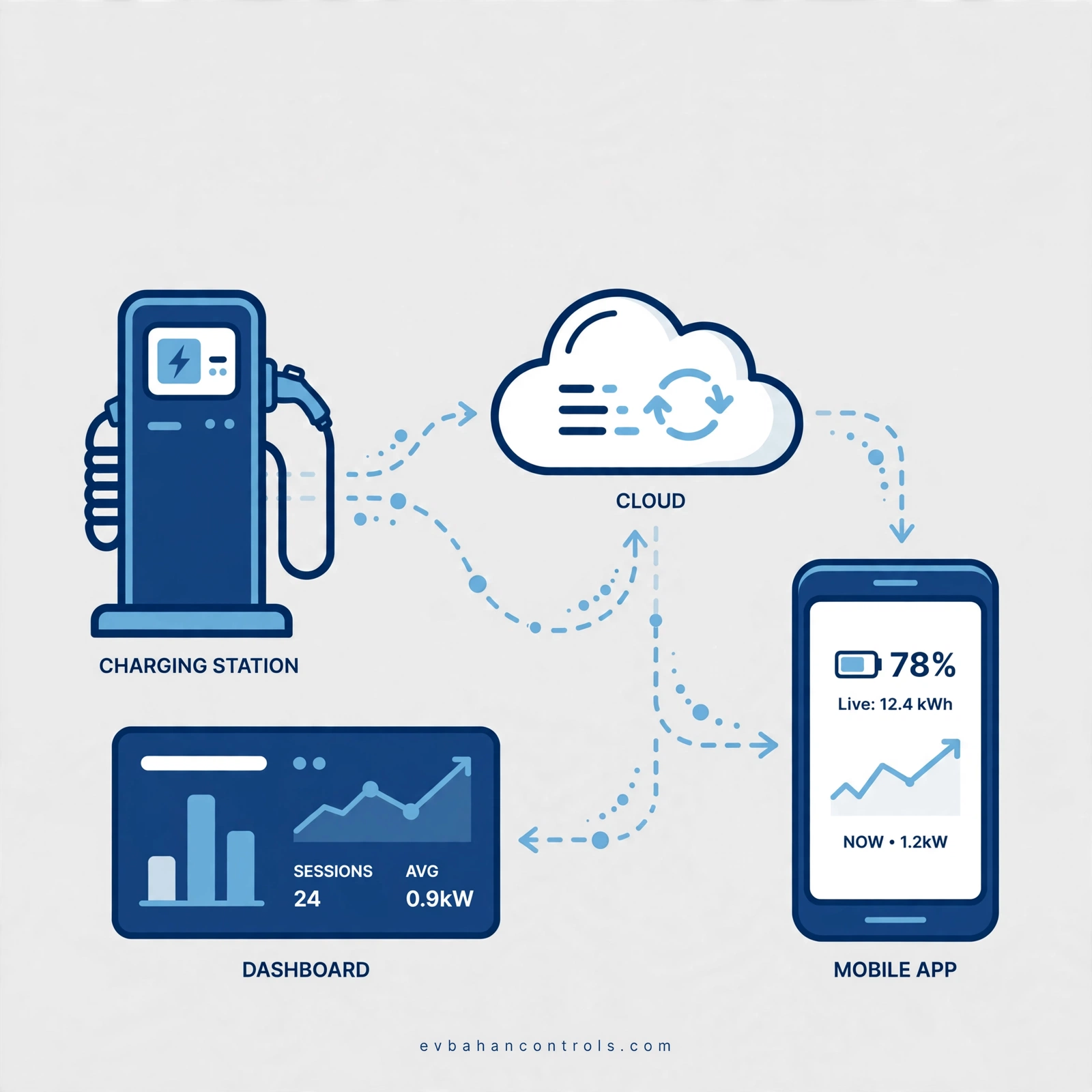
Real-time data sharing
Station availability, tariffs, and status shared instantly across partner networks.
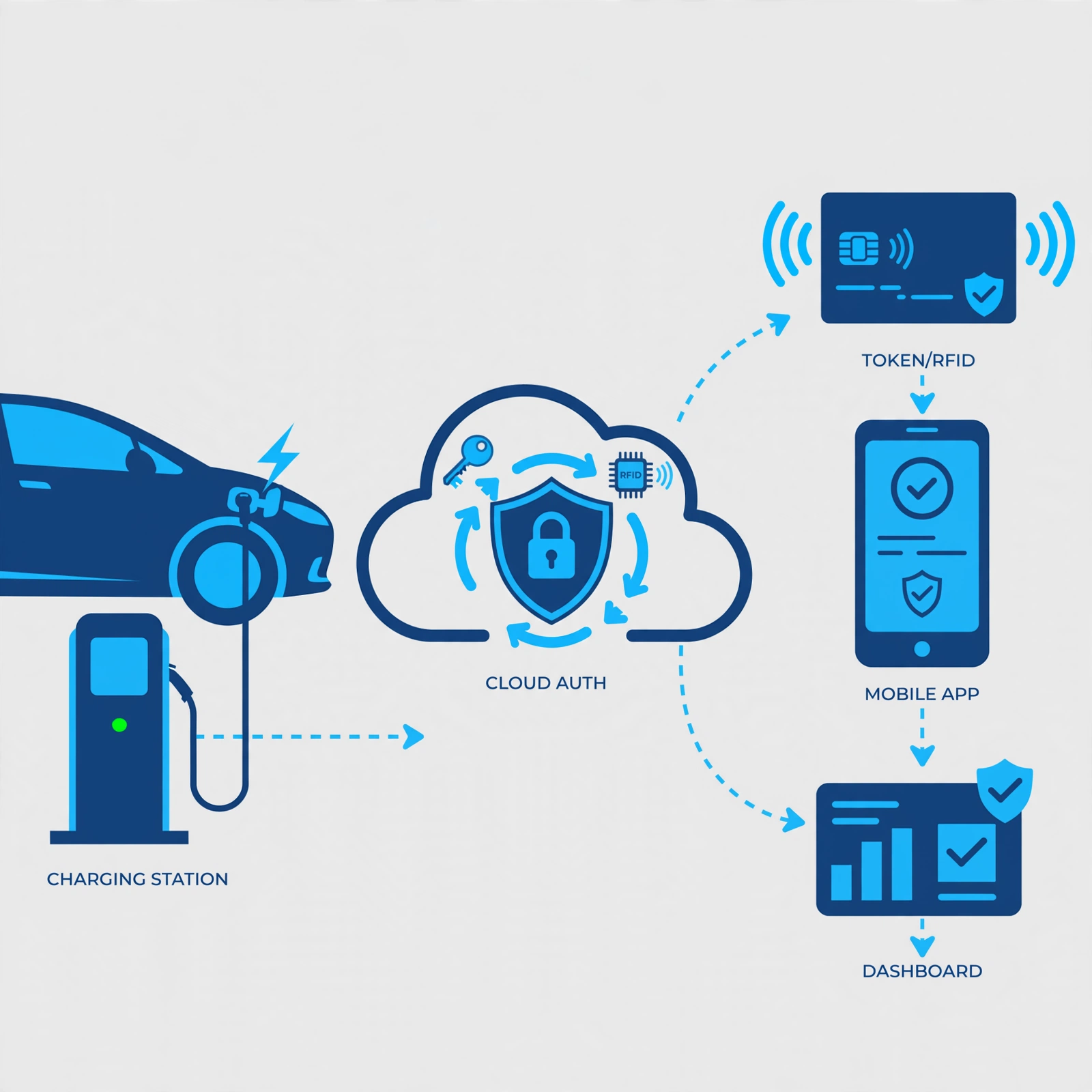
Plug & Charge & token auth
Vehicle-based or token-based authentication for app-less roaming sessions.
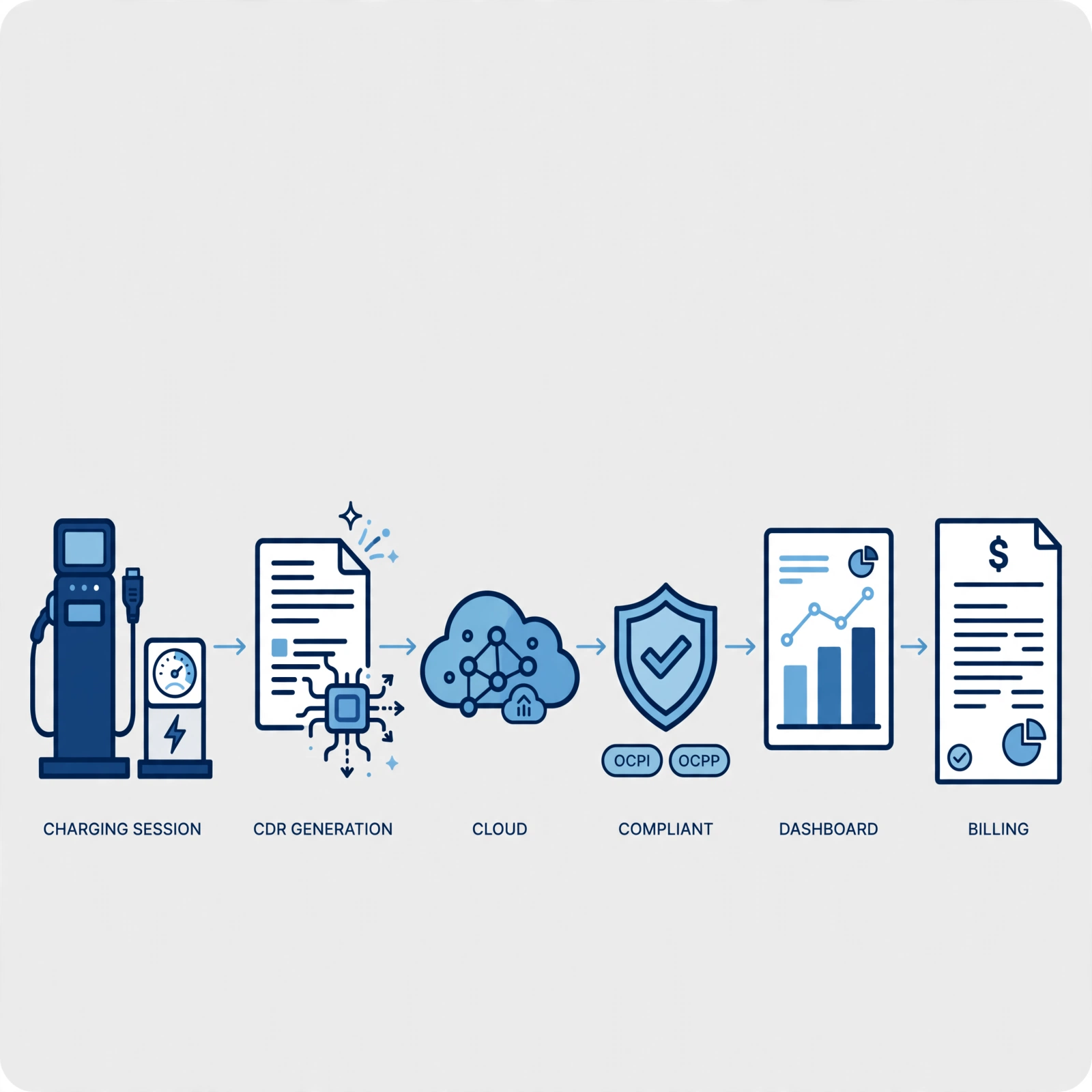
Standards-compliant CDRs
Charge Detail Records built for clean, disputable-free settlement between operators.
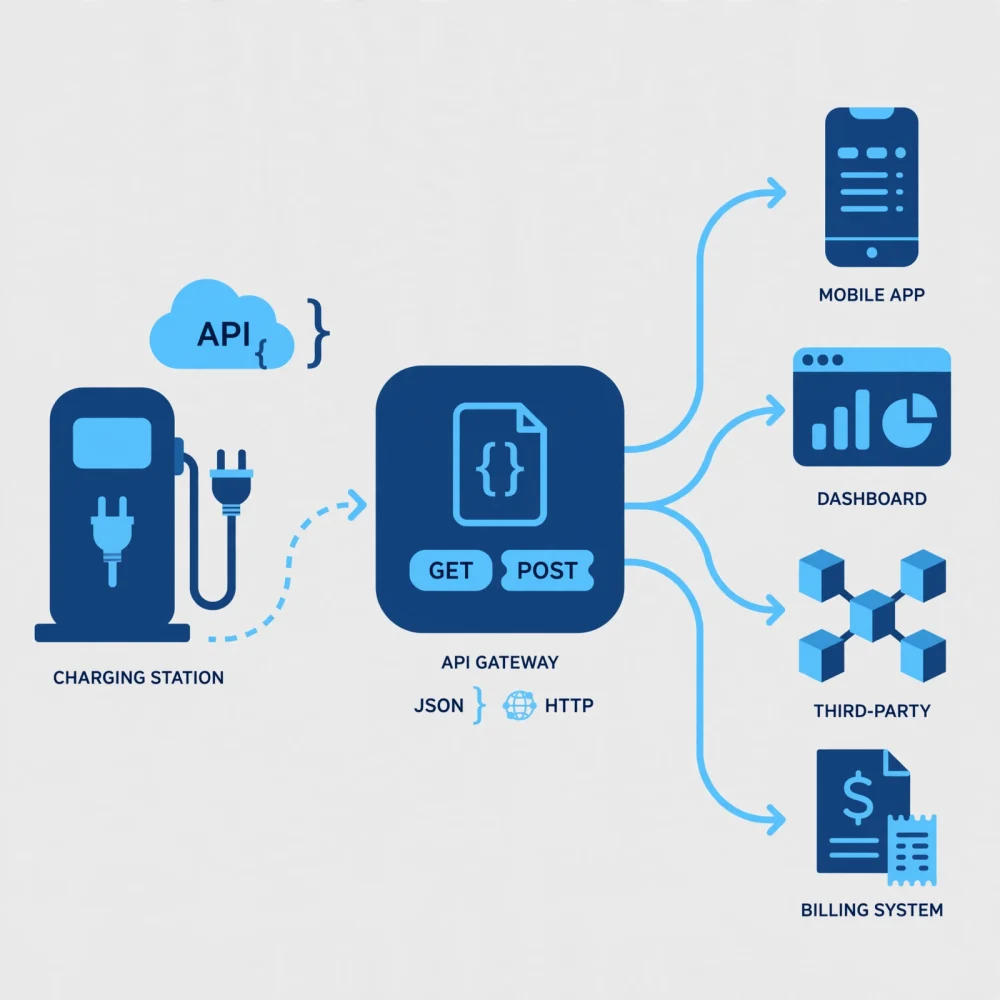
Flexible JSON/
HTTP APIs
Connect roaming into your existing backend, CMS, or
billing system.
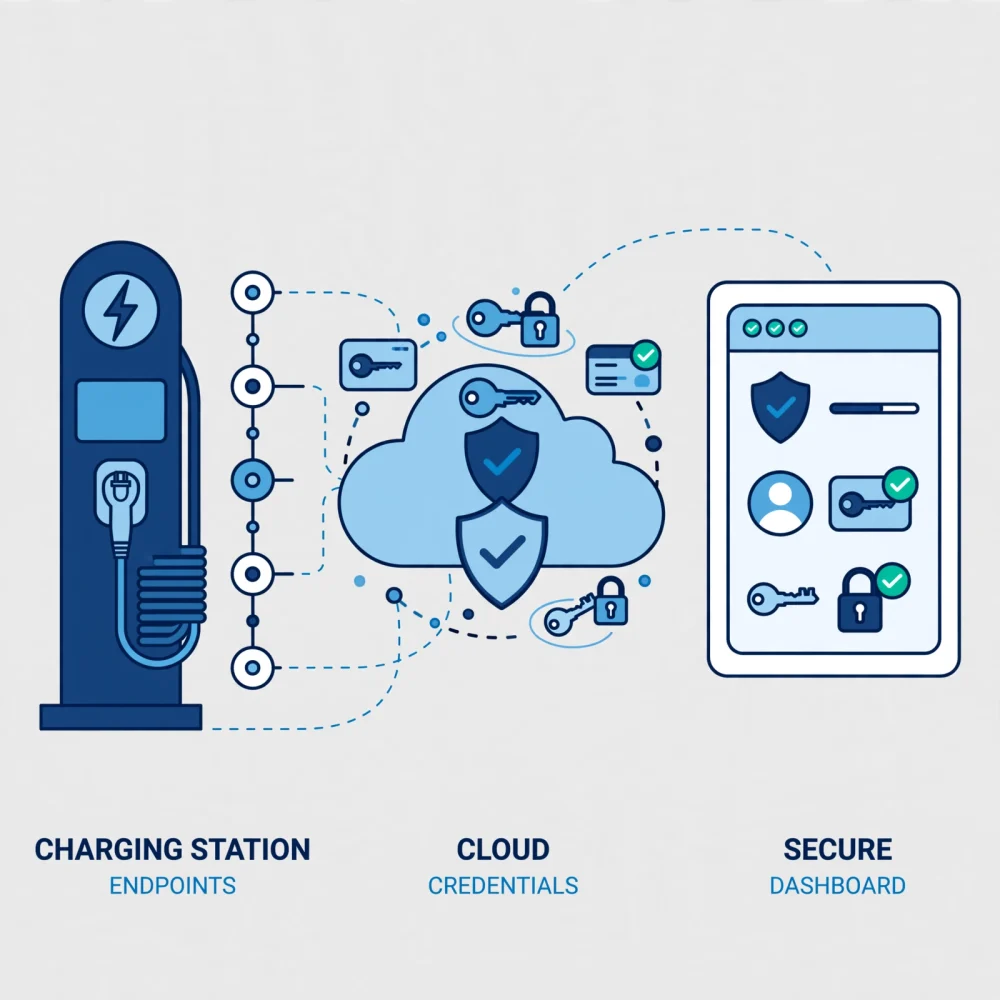
Credential & endpoint management
Onboard new roaming partners without manual endpoint mapping each time.
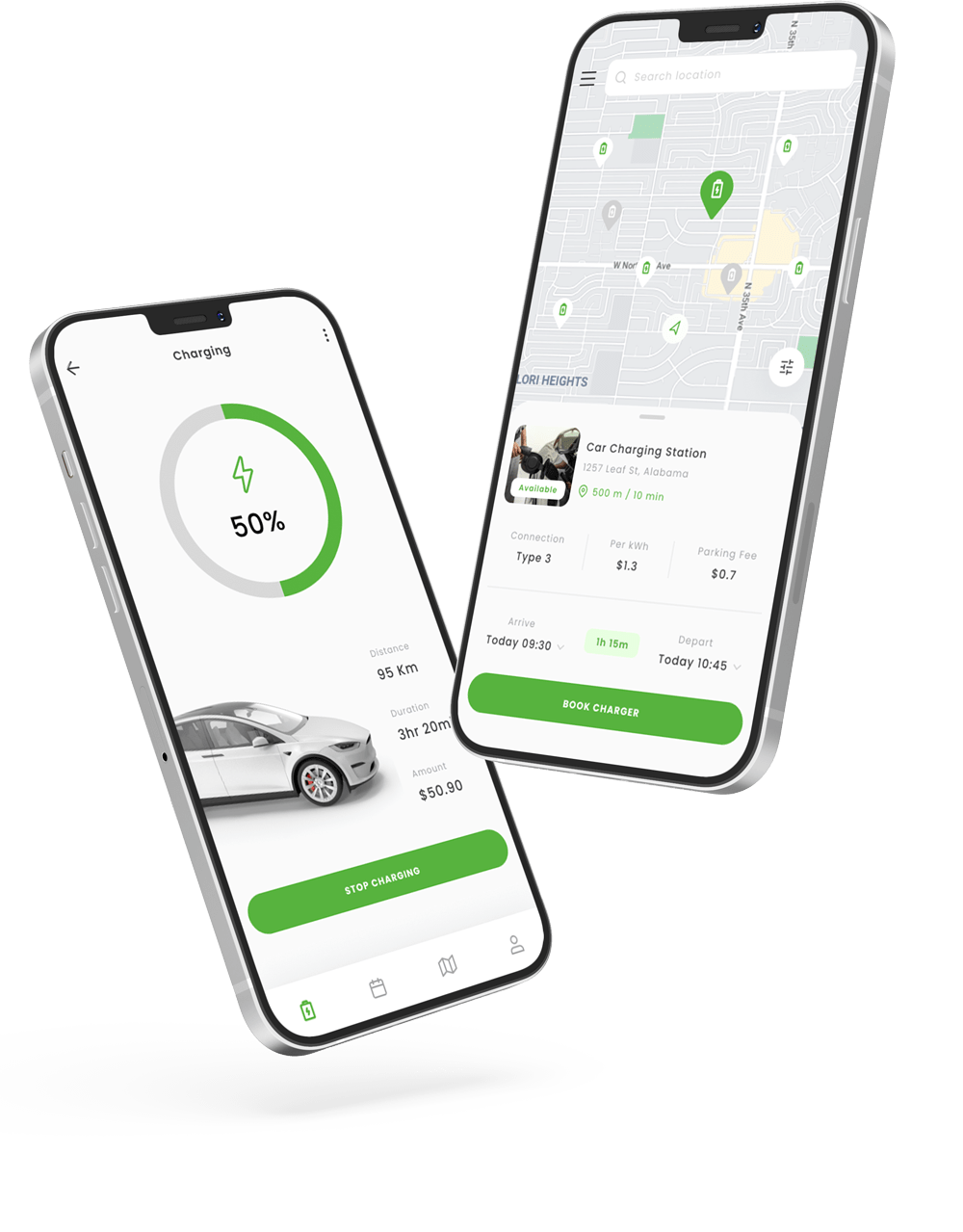
Download Pertaev App
Find An Available Charging Station Near You With Our App
EV charging roaming lets a driver charge at a station outside their home network using the same app, RFID card, or account — the networks authenticate and settle billing automatically behind the scenes, without the driver needing a separate login for every operator.


Bridging the Gap: Empowering the Next Generation of CPOs & eMSPs
Charge Point Operators
Grow utilization & revenue
- Reach drivers outside your own app's install base
- New revenue stream from roaming traffic
- Lower customer-acquisition cost per charger
Charge Point Operators
Benefits for CPOs and eMSPs
- Reach drivers outside your own app's install base
- New revenue stream from roaming traffic
- Lower customer-acquisition cost per charger
Frequently asked questions
1. What is EV charging roaming?
EV charging roaming lets a driver charge at a station outside their home network using the same app, RFID card, or account. The networks authenticate the driver and settle billing automatically behind the scenes, so there’s no need for a separate login or app for every operator.
2. What is OCPI (Open Charge Point Interface)?
OCPI is an open, vendor-neutral protocol that lets Charge Point Operators (CPOs) and eMobility Service Providers (eMSPs) exchange data automatically — including station locations, tariffs, live availability, session data, and billing records. It removes the need for custom point-to-point integrations between every pair of networks.
3. What's the difference between OCPI and OCPP?
OCPP connects a physical charger to its own backend management system — it’s a “vertical” connection between hardware and software. OCPI connects two different networks’ backends to each other — a “horizontal” connection that enables roaming. A charging network typically needs both: OCPP to run its own chargers, OCPI to let drivers roam onto other networks.
4. Which version of OCPI does EV Bahan Controls support?
EVBahan Controls supports OCPI [2.2.1 / 2.1.1 — confirm accurate version], covering core modules including Locations, Sessions, Tariffs, Tokens, CDRs, and Commands. [If applicable: Support for OCPI 2.3 is planned as adoption grows across partner networks.]
5. Does EV Bahan Controls support Plug & Charge?
Yes. Vehicle-based authentication lets a driver plug in and start charging automatically, without opening an app, scanning a QR code, or tapping an RFID card.
6. Can I connect to multiple roaming partners at once?
Yes. The platform supports OCPI-based connections to multiple CPOs and eMSPs simultaneously, with credential and endpoint management handled individually per partner so you’re not manually re-mapping integrations each time you add a new one.
7. What's the difference between direct (bilateral) roaming and a roaming hub?
Direct roaming is a one-to-one OCPI connection where two networks agree on terms and integrate directly — more control, but a new integration for every partner. A roaming hub is a single connection that gives you access to every network already on that hub — faster to scale, with less ongoing integration work. EVBahan Controls supports [direct integration today / both models — confirm accurate status].
8. Is EV charging roaming only for public chargers?
Primarily, yes — that’s where network fragmentation is the biggest problem for drivers today. Private and semi-public chargers, such as workplace or residential ones, can be added to a roaming network selectively over time.
9. How long does it take to integrate with EV Bahan Controls' roaming platform?
[Insert real figure, e.g. “A standard OCPI integration typically takes X business days from credentials exchange to live data flow, depending on which modules you need and the complexity of your existing systems.”]
10. Who is EV charging roaming for?
Roaming benefits CPOs (who gain access to more drivers and new revenue from roaming traffic), eMSPs (who can offer their users a wider charging footprint without building it themselves), EV OEMs (who can embed multi-network charging into their vehicle apps), and fleet operators (who get centralized billing across networks their vehicles use).
11. How does billing work across different charging networks?
When a session ends, the CPO generates a Charge Detail Record (CDR) containing energy delivered, duration, and cost, and sends it to the eMSP via OCPI. The eMSP then bills its driver on one consolidated invoice — the driver never has to reconcile charges across multiple operators themselves.
12. Is OCPI secure?
Yes. Every OCPI request requires a credentials token in the request header, and connections are established through a formal handshake process before any data is exchanged. [Add any specifics — encryption in transit, token rotation, etc., if accurate.]
13. Do I need to replace my existing charging management software to add roaming?
No. EVBahan Controls’ OCPI integration is designed to sit alongside your existing CPMS or CSMS — you don’t need to migrate or rebuild your current platform to start roaming.
14. What countries or regions does EV Bahan Controls support roaming in?
[Insert real answer — this is important since your footer implies India/Malaysia/Singapore presence but the page doesn’t state it. E.g. “EVBahan Controls currently supports roaming integrations across India, with expansion underway in Malaysia and Singapore.”]
15. How is EV Bahan Controls different from a generic OCPI roaming hub?
[This is your positioning question — worth answering specifically rather than generically. E.g. “Unlike a pure roaming hub, EVBahan Controls combines OCPI roaming with a full white-label CMS, so CPOs and eMSPs get network connectivity and their own branded driver app/back-office in one platform, not two separate vendors to manage.”]
Ready to connect your network?
EV charging roaming lets a driver use a charger outside their home network with the same app, card, or account — the networks handle authentication and billing automatically in the background.
Operating charging stations across Maharashtra was challenging because users only came if they had our specific app. Since integrating EVBahan’s roaming platform, our stations are now visible to users of other networks. We've seen a 30% increase in charger utilization without any extra marketing spend.